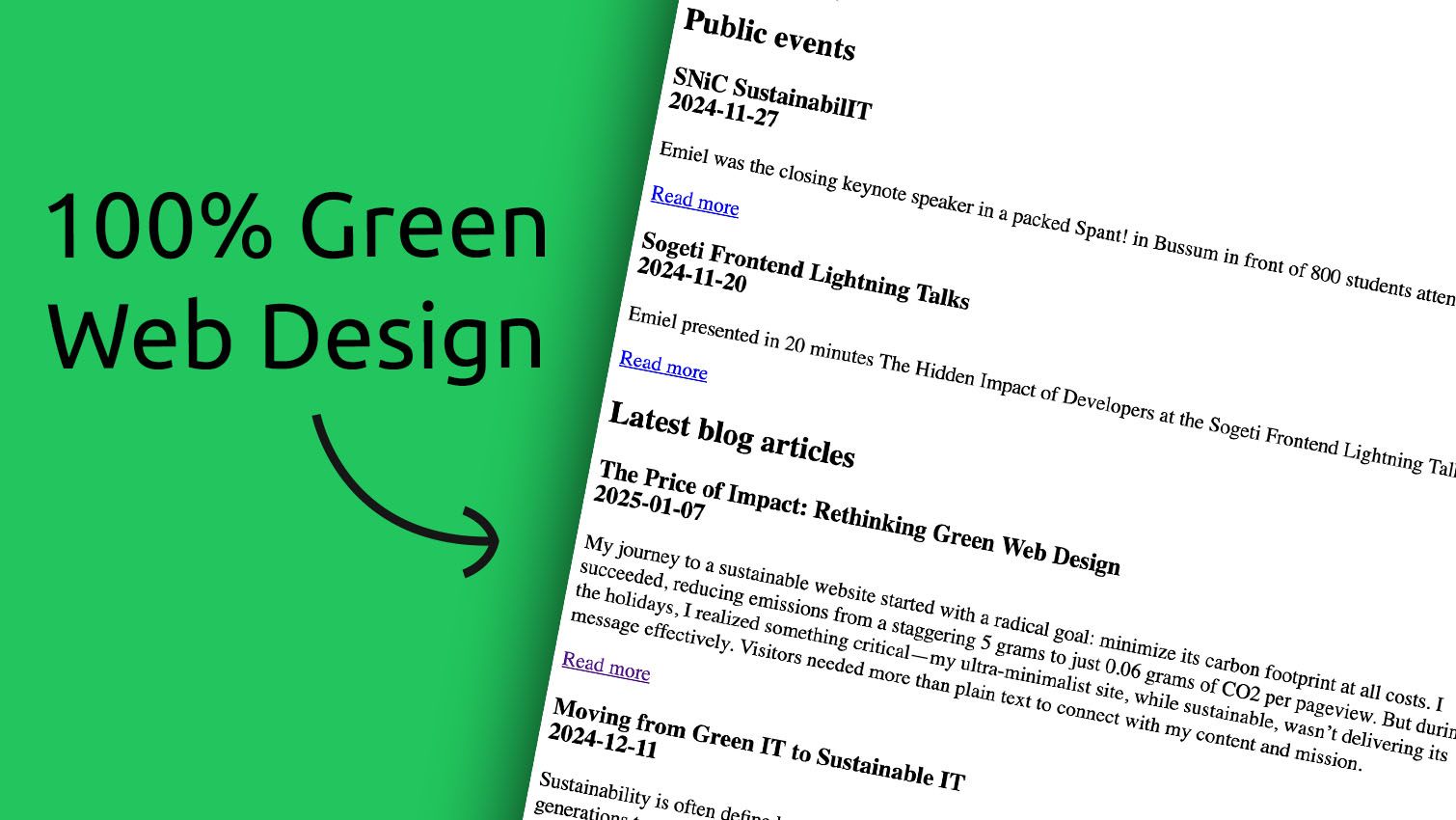
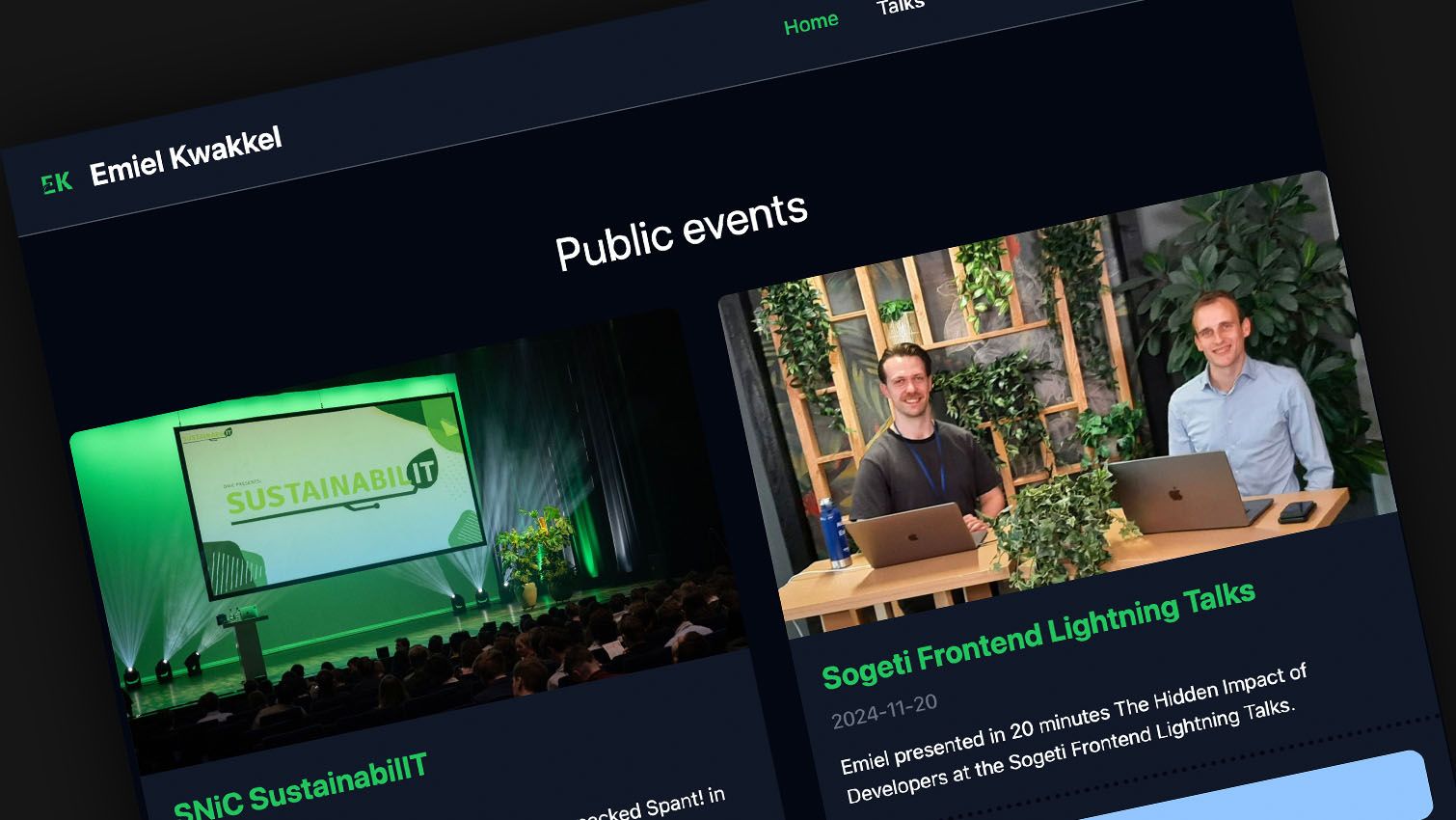
My journey to a sustainable website started with a radical goal: minimize its carbon footprint at all costs. I succeeded, reducing emissions from 5 grams to just 0.06 grams of CO2 per pageview. But I realized that minimising to zero was not representative for real life projects. And even more: visitors needed more than plain text to connect with my content and mission.
The result? A redesigned website that balances sustainability with usability. While the footprint has increased slightly to 0.21 grams per pageview, the enhanced design now includes professional layouts, photos of my talks, and embedded event videos, all optimized for efficiency. Here’s how I approached this trade-off.
World Wide Web first website
If sustainability were the sole goal, the most eco-friendly website would be a HTML page with no images, no styling, just plain text with hyperlinks.
But here’s the catch: a website exists to communicate. Stripping away visual appeal and usability undermines the site’s purpose. My initial minimalist design aligned with sustainability goals but fell short in delivering value to visitors.
This dilemma reflects a broader reality in sustainable IT: efficiency must always balance with usability. Absolute minimalism in digital design might save a few grams of CO2 per pageview, but in the grand scheme of things, the impact is marginal compared to larger issues in the tech industry, such data center energy usage, use of scarse resources for device manufacturing and generative AI.
Updated website
While updating my website, I focused on finding a middle ground. The new design embraces modern web standards while keeping performance at the forefront. Here’s what changed:
The updated site includes sections for photos of my talks, presentations, and embedded YouTube videos of event recordings. These elements are optimized, ensuring they load efficiently. I use formats like WebP for images and embed YouTube videos in a way that defers loading until a user interacts with them. The redesign also included accessibility improvements, ensuring that users with different needs can navigate and interact with the site.
Yes, the new design has increased the carbon footprint of my website—from 0.06 grams to 0.21 grams per pageview. At first glance, this might seem like a step backward, but in the broader context, this increase is negligible.
What matters is the potential for greater impact. The updated design makes my content more engaging and shareable, which I hope will help amplify the message of sustainable IT practices. The additional CO2 emissions are outweighed by the potential to inspire others to adopt eco-friendly principles in their own digital projects.
Alt
Sustainability isn’t about perfection, it’s about making thoughtful trade-offs. A balance between efficiency and usability often achieves the best results.
Alt
The goal of reducing emissions shouldn’t compromise a site’s ability to fulfill its purpose. A slightly higher carbon footprint is acceptable if it helps spread a valuable message.
Alt
Even with added media, there are ways to keep a website efficient. Compressing images, deferring non-essential scripts, and using green hosting providers are all steps in the right direction.
Sustainability in web design is about more than just cutting emissions; it’s about creating digital experiences that are both responsible and impactful. My updated website may not be as lightweight as its earlier version, but it’s far more effective in sharing the message of sustainable IT practices.
As you think about your own projects, remember that the most sustainable choice isn’t always the simplest or most minimalistic one. Instead, aim for solutions that balance efficiency with purpose, because, ultimately, the greenest website is one that inspires action.